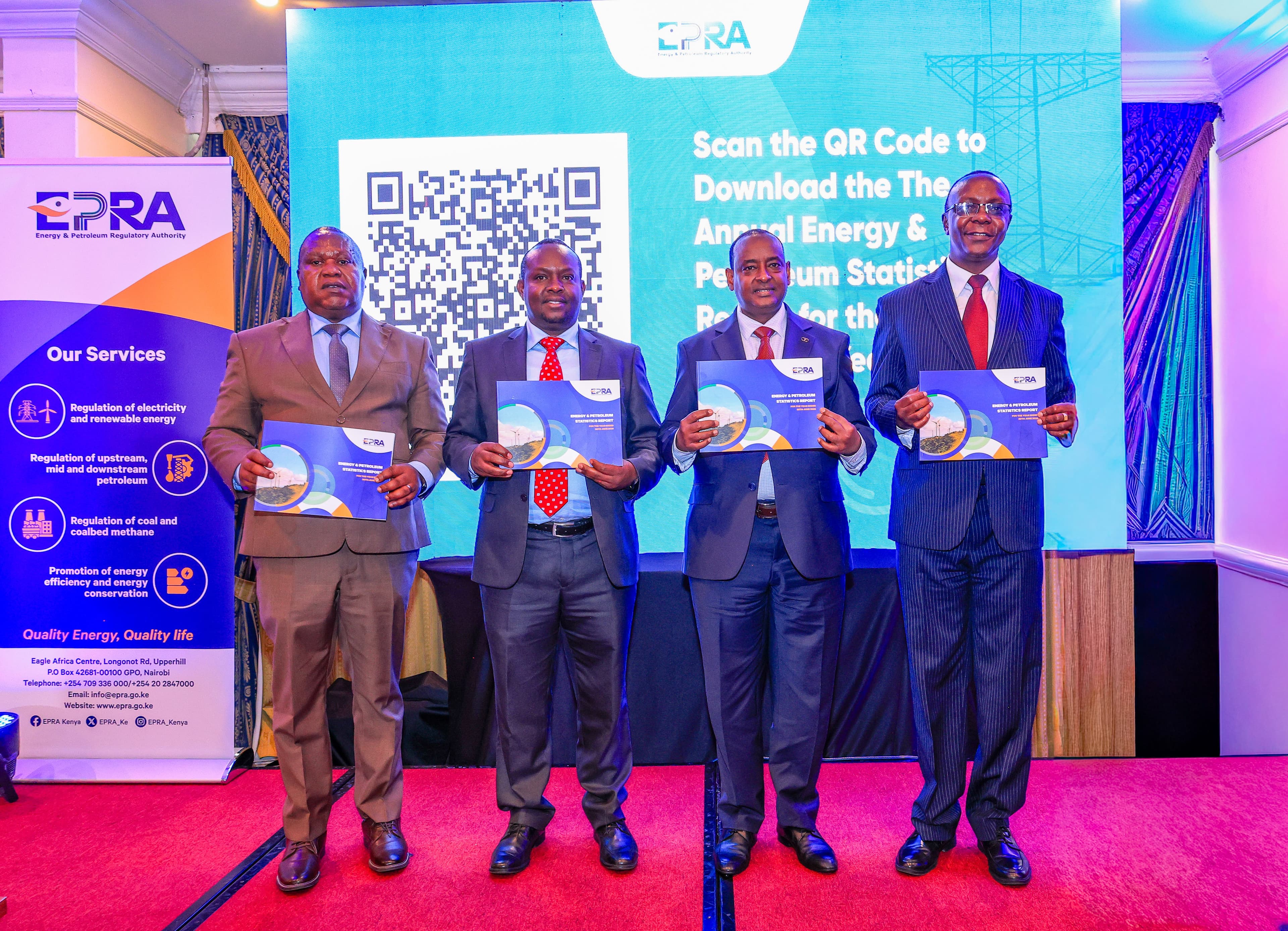
Kenya’s shift towards cleaner energy is gaining momentum, with liquefied petroleum gas (LPG) consumption, electric mobility and renewable-energy investments recording significant growth during the year ended June 2026, according to a new report by the Energy and Petroleum Regulatory Authority (EPRA).
The 2025/2026 Energy and Petroleum Statistics Report, released in Nairobi on Tuesday, shows LPG consumption increased by 14.62 percent during the period, with per capita consumption rising from 7.9 kilograms to 8.9 kilograms.
EPRA attributed the growth to increased availability of LPG, expanded importation, storage and distribution infrastructure, as well as government measures aimed at promoting cleaner cooking solutions.
The increase comes as households and businesses continue to shift away from traditional cooking fuels, placing LPG among the energy sources recording notable growth during the period under review.
Electricity consumption also increased, with domestic consumers recording an 18.87 percent rise to 4,327.07 gigawatt-hours (GWh). The growth was the highest recorded among the different consumer categories and was attributed to increased per capita consumption and growth in the number of connected customers.
The number of grid-connected customers reached 10.43 million during the year, reflecting continued expansion of electricity access.
At the same time, electricity consumption by electric mobility users more than doubled, rising by 143.01 percent from 5.04 GWh to 12.25 GWh.
EPRA said the growth followed increased uptake of the electric-mobility tariff, while changes to the tariff framework removed the monthly consumption cap that had previously limited users.
The developments come against a backdrop of rising overall electricity demand. Kenya recorded a new peak demand of 2,514.28 megawatts on June 29, 2026, an 8.55 percent increase from the previous financial year.
According to EPRA, this was the first time peak electricity demand crossed the 2,500 MW mark and represented the highest annual increase in peak demand recorded over the previous five years.
Electricity generation also increased during the year, while total installed generation capacity grew by 3.81 percent to 3,987.20 MW by June 2026.
Renewable sources continued to dominate Kenya’s installed electricity capacity, accounting for 81.16 percent when interconnected, captive and off-grid renewable capacity are combined.
Captive generation capacity increased by 12.05 percent to 676.60 MW, with solar photovoltaic installations accounting for a substantial share of the growth. Installed captive solar capacity rose by 24.22 percent during the period.
EPRA said the growth in captive generation could help reduce pressure on the national grid while providing businesses and other users with additional sources of electricity.
Kenya also continued to rely on regional electricity trade to supplement domestic generation. Electricity imports increased by 379.81 GWh to 1,913.66 GWh, raising their share of the country's total electricity supply from 10.60 percent to 12.19 percent.
Ethiopia remained the main source of imported electricity, supplying 1,577.66 GWh through the 500-kilovolt high-voltage direct-current interconnection. Uganda supplied 322.06 GWh, while Tanzania contributed 6.53 GWh.
EPRA said Kenya currently draws 200 MW through the Ethiopia interconnection, with the capacity expected to increase to 400 MW under the next phase of the power purchase agreement with Ethiopian Electric Power.
The report also points to continued growth in the petroleum sector, with petroleum product imports rising by 11.52 percent to 10.88 million cubic metres during the year.
Domestic petroleum consumption increased by 8.41 percent to 6.33 million cubic metres, reflecting increased activity in sectors including transport and construction.
Imports made under the Kenya Government-to-Government framework accounted for 72.42 percent of total petroleum import volumes during the period.
Beyond consumption and supply, the report highlights continued regulatory activity across the energy and petroleum sectors.
EPRA approved 10 power purchase agreements during the year and issued 11 electricity generation licences, eight distribution and retail supply licences, and one electricity export and import licence.
The Authority also reported an increase in electrical worker and contractor licences issued during the year. Worker licences rose by 53 percent to 884, while contractor licences increased by 22 percent to 648.
EPRA attributed the increase partly to greater public awareness and the decentralisation of licensing services through its regional offices.
Consumer complaints handled by the regulator also remained a key part of its mandate. Of the 489 complaints reported to EPRA during the financial year, 482 had been resolved by the end of June, while seven remained under review.
In the upstream petroleum sector, the report indicates that development of Kenya’s discovered petroleum resources continued, with regulatory and technical processes underway across 50 petroleum exploration blocks.
The statistics report is intended to provide government, investors, industry players, consumers and other stakeholders with data on developments across Kenya’s energy and petroleum sectors.
EPRA Acting Director General Dr. (Eng.) Joseph Oketch said the publication was intended to support evidence-based decision-making and provide information that can guide investment and planning in the sector.
He said the Authority would continue focusing on regulation, investment facilitation and consumer protection while supporting an energy transition that is inclusive, affordable and sustainable.
The report comes at a time when Kenya's energy system is facing two simultaneous trends: rising overall demand for electricity and increasing adoption of technologies and fuels associated with the country's transition towards cleaner energy.