Healthcare workers have vowed to continue their nationwide strike until all their grievances are addressed, accusing county governments of negligence, inaction and failure to honour agreements on workers' welfare, while calling for health services to be transferred back to the national government.
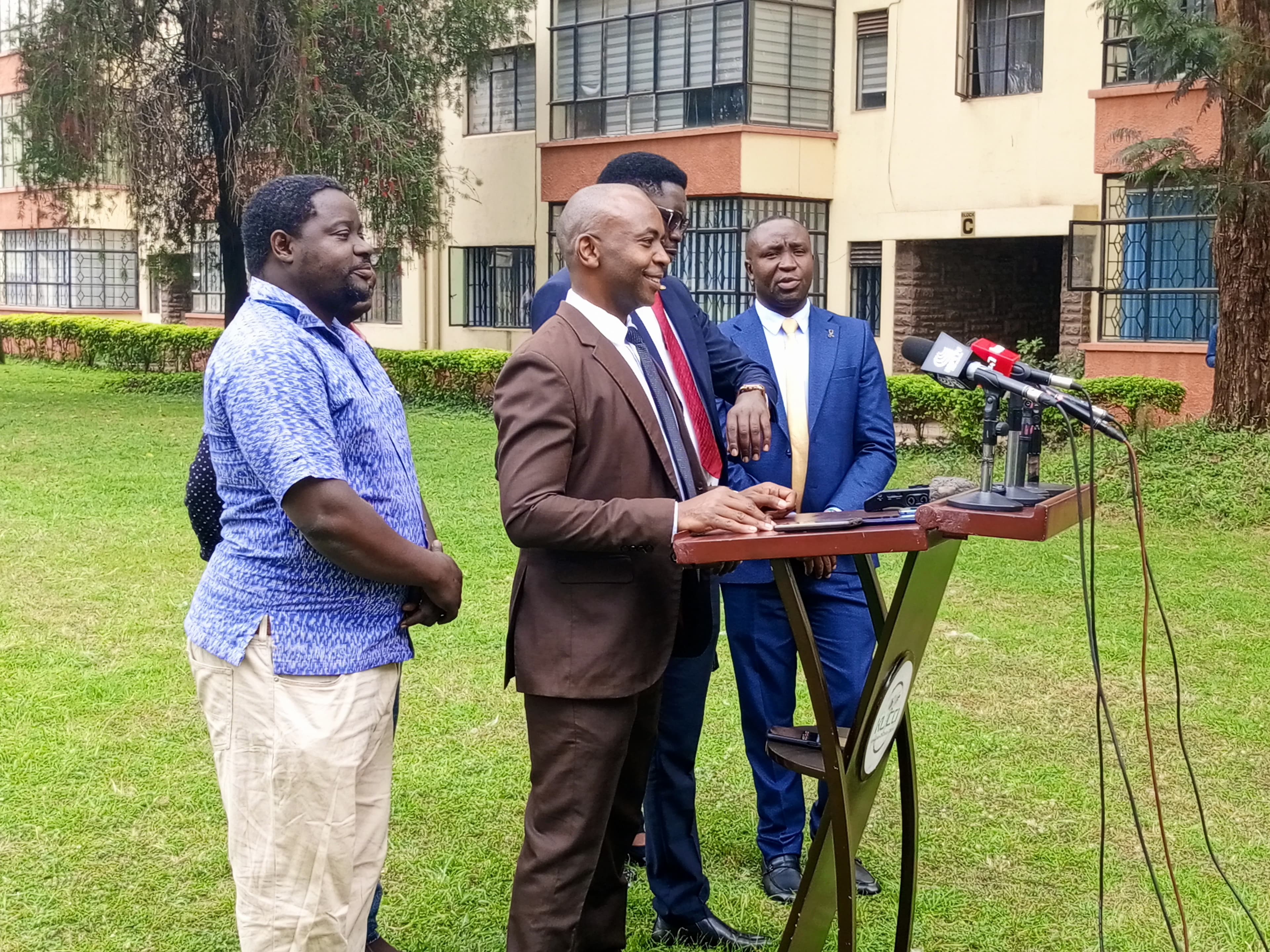
Addressing the media in Nairobi, officials from the Kenya Union of Clinical Officers (KUCO), the Kenya National Union of Medical Laboratory Officers and representatives of Universal Health Coverage (UHC) workers said county governments had ignored demand notices issued on June 2 and a 14-day strike notice served on July 6, despite repeated appeals for dialogue.
The union leaders said more than 60 days had passed since they first raised their concerns, yet the Council of Governors had not formally invited them for meaningful negotiations.
"We have been talking for months, but the governors have chosen to communicate through the media instead of engaging us," the officials said.
They, however, acknowledged efforts by the Ministry of Health, saying Health Cabinet Secretary Aden Duale had facilitated several meetings and ensured July salaries for affected workers were paid. They also commended the ministry for initiating the process of converting UHC workers to permanent and pensionable terms.
However, they argued that the process remains incomplete because county governments have failed to issue the employment confirmation letters required to formalize the appointments despite Parliament allocating KSh8.9 billion for the transition of UHC workers and Global Fund staff.
The unions maintained that governors had failed to fulfil their constitutional responsibility of ensuring Kenyans access quality healthcare, accusing county administrations of allowing public health facilities to grind to a halt.
According to the healthcare workers, nurses, clinical officers, laboratory officers and public health officers remain on strike across the country, leaving many public hospitals operating with severely limited services.
Union leaders warned that the continued standoff demonstrates that county governments are unable to effectively manage Kenya's healthcare system and called for health services to be reverted to the national government.
They argued that healthcare, like security and education, is too critical to be subjected to persistent labour disputes and administrative delays.
The officials noted that when Universal Health Coverage was launched in 2020, the national government recruited about 9,500 healthcare workers because counties lacked sufficient personnel. During the COVID-19 pandemic, they said, the national government again stepped in to recruit additional workers who remain on contract to date.
They said the repeated intervention by the national government was evidence that counties have struggled to manage human resources for health.
The unions also criticized some governors for allegedly politicizing labour issues instead of implementing national policies, insisting that career guidelines and collective bargaining agreements are policy matters that counties are constitutionally required to implement.
The striking workers demanded immediate issuance of permanent and pensionable appointment letters for UHC and Global Fund staff, payment of pending gratuity, signing and implementation of all outstanding Collective Bargaining Agreements, and meaningful negotiations with county governments.
They warned that they were prepared to sustain the industrial action for as long as necessary, saying patient care would only improve when healthcare workers are adequately employed, motivated and fairly compensated.
The union leaders further urged Kenyans to hold leaders accountable for the current healthcare crisis, arguing that the prolonged strike reflects deeper structural challenges within the devolved health system.
As the impasse continues, thousands of patients across the country remain affected by disruptions in essential medical services, piling pressure on both the national government and county administrations to reach a lasting solution to one of the country's most significant healthcare labour disputes in recent years.