Kenya plans to increase its electricity generation capacity from the current 3,300 megawatts to 10,000 megawatts, with about 3,000 megawatts expected to come from nuclear energy, Principal Secretary for the State Department for Science, Research and Innovation Prof. Abdulrazak Shaukat has announced.
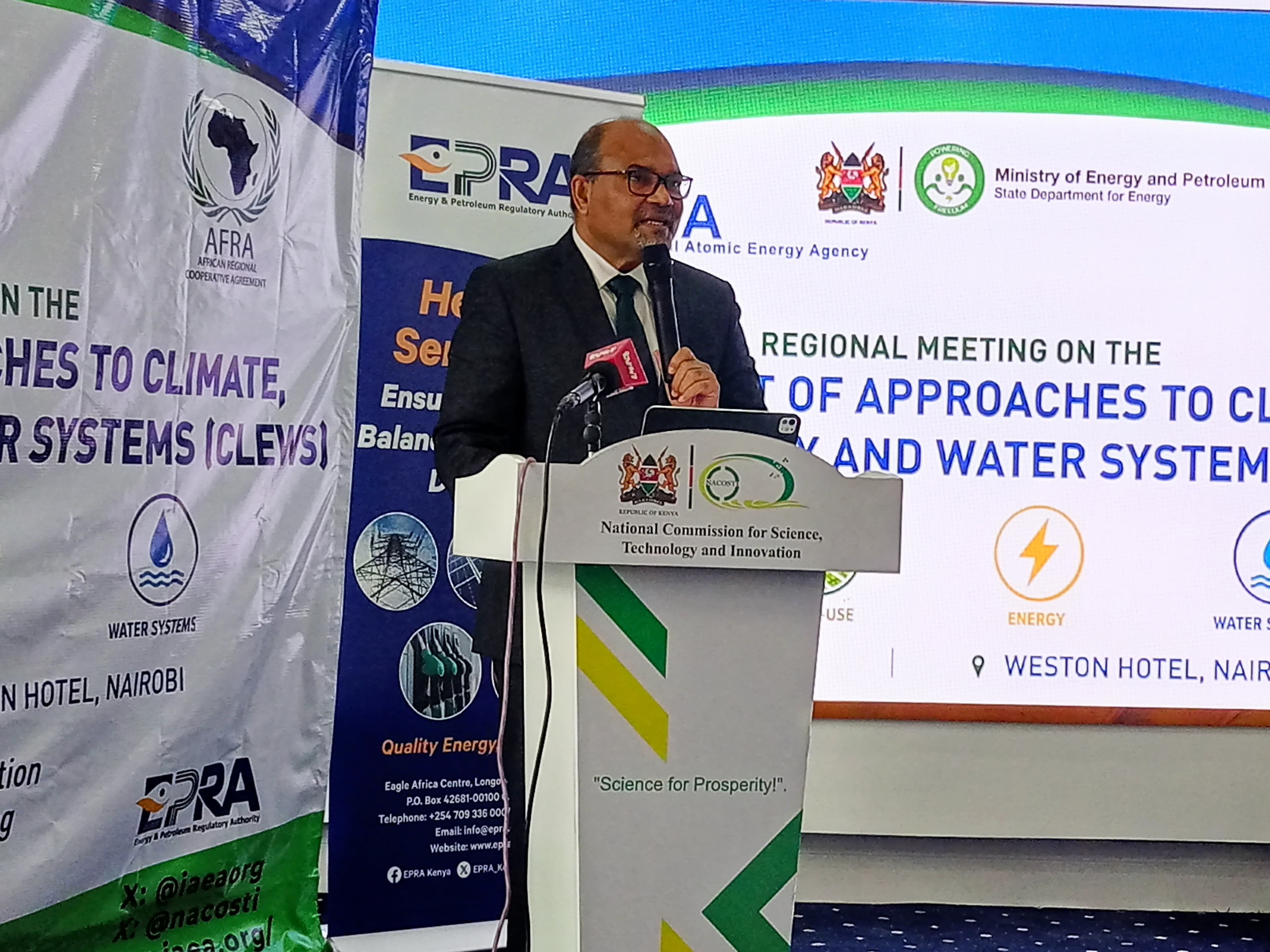
Speaking during the International Atomic Energy Agency (IAEA) Regional Meeting on the Development of Approaches to Climate, Land-use, Energy and Water Systems (CLEWS) in Nairobi, Prof. Shaukat said science, research and innovation will be central to achieving the country's long-term energy ambitions.
He said while Kenya is already a global leader in renewable energy, diversification through nuclear power and other emerging technologies will be necessary to support industrialisation, economic growth and future electricity demand.
"More than 90 per cent of Kenya's electricity is generated from renewable energy, making Kenya one of the world's leading producers of clean electricity. However, we must continue planning for the future through science and innovation," he said.
Prof. Shaukat noted that Africa contributes less than four per cent of global greenhouse gas emissions but remains among the regions most affected by climate change, making integrated planning increasingly important.
He said Africa's population is projected to grow from approximately 1.5 billion people to nearly 2.5 billion by 2050, significantly increasing demand for electricity, food, water and infrastructure.
To address these challenges, he called on African countries to strengthen investment in scientific research, innovation and technology while adopting integrated approaches that consider climate, land, water and energy as interconnected systems.
The Principal Secretary also urged governments to embrace emerging technologies such as artificial intelligence, remote sensing, geographic information systems, digital twins and big data to improve forecasting, planning and evidence-based decision-making.
He emphasized the need to strengthen regional cooperation through the African Regional Cooperative Agreement for Research, Development and Training Related to Nuclear Science and Technology (AFRA), saying collaboration would help build local expertise and reduce dependence on external technical support.
Prof. Shaukat further encouraged African governments to increase funding for research and innovation, noting that evidence-based policymaking is critical to sustainable development.
"Policy without research becomes guesswork, while research without impact is a missed opportunity for development," he said.
He also highlighted Kenya's continued investment in infrastructure, regional connectivity and domestic resource mobilisation as key pillars for supporting industrialisation and achieving the aspirations of the African Union Agenda 2063.
The regional meeting brought together government officials, scientists and technical experts from across Africa to explore how integrated planning can support secure, affordable and climate-resilient energy systems while advancing sustainable development goals.